


In today’s rapidly evolving industrial landscape, integrating industrial sensors into automated systems has become not only a competitive advantage but a fundamental necessity. From predictive maintenance to real-time optimization, industrial sensors enable smarter control and decision-making across production lines. As factories transition toward Industry 4.0, the synergy of automation, smart control, and sensing technologies is setting new standards for safety, efficiency, and productivity.

The Role of Industrial Sensors in Automation
At the heart of every automated system, industrial sensors act as the eyes and ears—capturing data from machinery, environmental conditions, and processes. These sensors convert physical conditions like temperature, pressure, distance, or motion into electrical signals that controllers and software platforms interpret for immediate or predictive action.
In modern smart control strategies, data from industrial sensors ensures that machines adapt dynamically, maintain consistent quality, and avoid costly downtime. This level of responsiveness enhances safety, reduces waste, and improves overall equipment effectiveness (OEE).
Types of Industrial Sensors Used in Smart Control
Depending on the process requirements, different types of sensors are employed in automation solutions. Some commonly used industrial sensors include:
- Proximity sensors – Detect nearby objects without contact, ideal for positioning and safety applications.
- Temperature sensors – Monitor heat levels in processes like welding, molding, or HVAC control.
- Pressure sensors – Used in hydraulic or pneumatic systems to maintain optimal performance.
- Vibration sensors – Enable predictive maintenance by detecting abnormal machine operations.
- Optical sensors – Crucial in quality inspection, object counting, and packaging automation.
Integrating the appropriate sensor types is essential to building intelligent, responsive, and adaptive systems in industrial settings.
How Smart Control Systems Leverage Sensor Data
Smart control in automation utilizes the data collected from industrial sensors to make instant and data-driven decisions. Advanced algorithms, edge computing, and AI-powered analytics interpret sensor inputs to execute precise commands and optimize workflows autonomously.
Here’s how smart control benefits from sensor integration:
- Real-time equipment monitoring and fault detection
- Energy consumption optimization
- Autonomous quality control and pattern recognition
- Customizable machine behavior for dynamic changes in production
These capabilities form the foundation of Smart Factories. An excellent reference example of such integration can be found at IDEA Group Vietnam, which leads in implementing high-tech automation solutions in Southeast Asia.
Integrating Industrial Sensors: Key Considerations
Integrating industrial sensors effectively requires thorough planning and infrastructure readiness. Companies must consider sensor compatibility with PLCs, microcontrollers, communication protocols (e.g., Modbus, OPC-UA, Ethernet/IP), and industrial IoT platforms.
Key considerations include:
- Environment suitability – Ensuring sensors are robust and rated for high heat, moisture, or corrosive conditions.
- Signal conversion and processing – Choosing analog vs. digital outputs and signal conditioners.
- Calibration and maintenance – Establishing routines for performance accuracy and longevity.
Collaboration with experienced automation integrators like IDEA Technology ensures seamless integration and future-proof scalability.
Real-World Applications of Sensor-Driven Automation
Industries across the globe are capitalizing on the benefits of integrating industrial sensors into automated systems. Here are a few impactful examples:
- Food and beverage – Sensors monitor temperature and pressure to maintain product safety and quality.
- Automotive manufacturing – Proximity and vision sensors guide robotic welders and assembly arms.
- Electronics – Precision sensors ensure accurate placement of micro-components during assembly.
- Logistics – Sensors enable conveyors and AGVs to autonomously sort, track, and route packages.
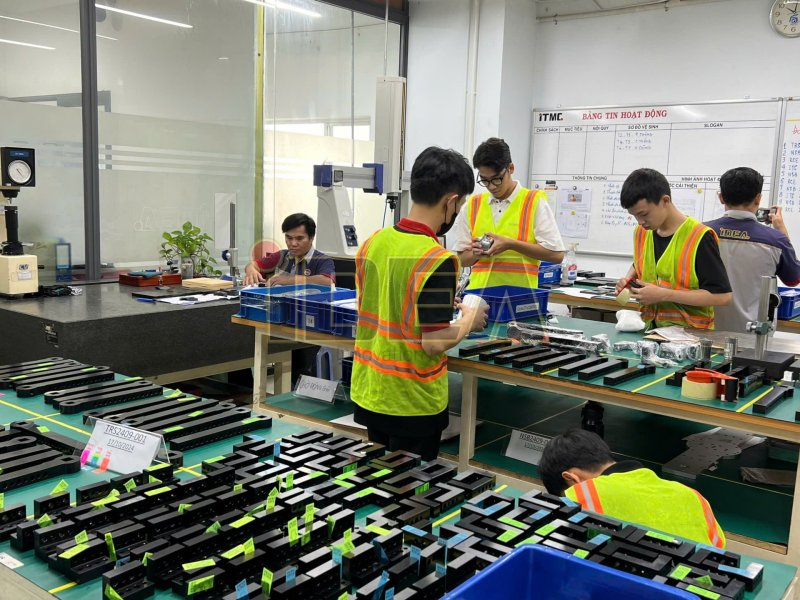
Leading manufacturers like Che Tao May IDEA have adopted advanced sensor-integrated systems, significantly enhancing production transparency and efficiency.
Conclusion: Future-Proof Your Factory with Industrial Sensors and Smart Control
As industry trends continue to shift toward connectivity and intelligent automation, incorporating industrial sensors is no longer optional—it is foundational. With the power of smart control, businesses can dramatically elevate system responsiveness, reduce manual intervention, and create highly efficient production environments. Whether upgrading an existing line or designing from the ground up, aligning with automation experts who understand industrial sensors and control infrastructure is critical to success.
Partner with IDEA—Vietnam’s trusted leader in industrial machine design, manufacturing, and automation integration—for tailored sensor-based solutions that deliver measurable ROI.
Leave a Reply