


As automation continues to redefine industrial operations, the integration of industrial sensors has become essential for achieving precision, safety, and efficiency. These smart devices play a pivotal role in gathering real-time data, enabling seamless communication between machines and advanced control systems. By incorporating industrial sensors into automated systems, businesses can unlock smarter control capabilities, predictive maintenance, and agile responses to dynamic operational environments.

Understanding the Role of Industrial Sensors in Automated Systems
Industrial sensors are the eyes and ears of automated systems, providing critical data such as temperature, pressure, proximity, and motion. This data supports machine learning algorithms, smart control platforms, and process optimization in smart factories. Integration ensures the system’s responsiveness, improves process transparency, and enhances productivity across manufacturing lines.
Key Benefits of Sensor Integration in Automation
Integrating sensors in automated systems empowers manufacturers with the tools needed for high-performance operations. These benefits extend beyond simple monitoring:
- Enhanced Operational Efficiency: Sensors provide real-time feedback, allowing systems to adjust processes automatically without manual intervention.
- Predictive Maintenance: By monitoring equipment conditions, sensors support early detection of wear or failure, reducing unexpected downtime.
- Improved Product Quality: Consistent monitoring leads to tighter quality control through immediate detection of defects and anomalies.
- Energy Optimization: Intelligent control systems can adjust power usage based on sensor feedback, reducing overall energy consumption.
Types of Industrial Sensors Used in Automation
The selection of sensors depends on application needs. Commonly used industrial sensors in automation include:
- Proximity Sensors: Detect the presence or absence of objects without physical contact.
- Temperature Sensors: Monitor heat levels in machines and environments to maintain safe operation.
- Pressure Sensors: Essential for hydraulic and pneumatic systems, ensuring consistent performance.
- Optical Sensors: Used for object recognition, counting, and positioning in assembly lines.
Smart Control and the Role of Sensor-Driven Systems
Industrial automation is increasingly reliant on smart control platforms that make autonomous decisions based on sensor data. These platforms enable advanced analytics and system adaptability. A well-integrated network of sensors feeds data into centralized or edge computing systems, ensuring that control algorithms function in real time.
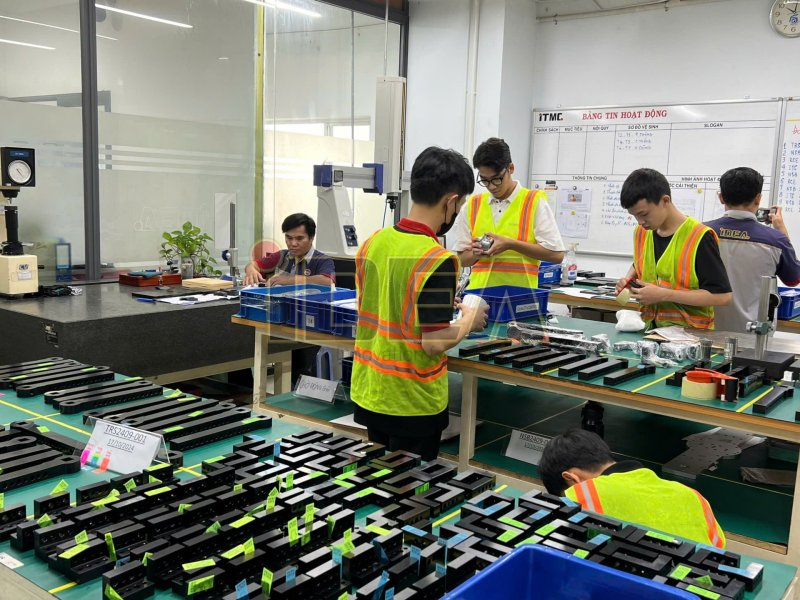
Companies like IDEA Technology are revolutionizing automation in Vietnam by implementing sensor-based architectures into custom machinery, enhancing both automation performance and ease of operation.
Challenges in Sensor Integration and How to Overcome Them
While the benefits are vast, integrating industrial sensors does present several challenges:
- Compatibility Issues: Selecting sensors compatible with existing control systems and communication protocols can be complex.
- Data Management: Processing large volumes of sensor data requires efficient storage and analytic solutions.
- Environmental Conditions: Harsh environments demand durable, IP-rated sensors with resistance to heat, dust, and moisture.
Solutions include choosing flexible and scalable sensor platforms, utilizing industrial IoT gateways, and implementing real-time data management strategies. For in-depth insights, refer to this comprehensive guide on industrial sensor integration.
Best Practices for Successful Sensor Deployment
To ensure seamless integration and long-term ROI, organizations should adopt these best practices:
- Clearly define operational goals and required metrics before selecting sensors.
- Validate sensor accuracy through pilot testing.
- Ensure compatibility with existing automation software and hardware.
- Train technical staff on sensor maintenance and troubleshooting.
- Continuously evaluate performance and adapt the system as needed.
Explore practical case studies and solutions implemented by leading firms like Idea Group Vietnam to streamline integrated sensor systems in diverse industrial sectors.
Unlock the Future of Manufacturing with Smart Control
Integrating industrial sensors into automation systems is no longer optional—it’s a strategic imperative for manufacturers seeking to stay competitive. From enhancing process control to enabling intelligent decision-making, smart control systems driven by sensor data redefine how modern industry operates. Collaborate with IDEA, Vietnam’s trusted leader in industrial machine design and manufacturing, and embrace sensor-powered innovation to future-proof your operations.
Leave a Reply