


As modern factories strive for greater efficiency and precision, integrating industrial sensors into automation and smart control systems has become essential. These sensors serve as the eyes and ears of automated machinery, collecting real-time data to improve decision-making, process control, and overall system reliability. From monitoring temperature and pressure to detecting proximity and motion, industrial sensors enable more intelligent and responsive operations that streamline production and reduce downtime.

The Role of Industrial Sensors in Automation and Smart Control
Industrial sensors are critical components in the ecosystem of automation. By capturing key variables during production, these devices empower embedded systems and controllers to react and adapt to changing conditions without the need for human intervention. Proper sensor integration ensures smarter control, elevating the accuracy, flexibility, and productivity of manufacturing lines.
Key Benefits of Sensor Integration
- Real-Time Monitoring: Enables instant feedback and quick response to anomalies.
- Improved Efficiency: Enhances system throughput and reduces energy waste.
- Predictive Maintenance: Identifies equipment wear and failure risks before breakdowns occur.
- Data-Driven Decision Making: Supports continuous process improvement through analytics.
Common Types of Industrial Sensors in Automated Systems
Choosing the right sensor type depends on the application and environmental conditions. Some of the most widely used sensors include:
- Proximity Sensors: Detect the presence of objects without contact, useful in robotics and conveyance systems.
- Temperature Sensors: Monitor thermal conditions to avoid overheating or maintain precise temperatures.
- Pressure Sensors: Measure fluid or air pressure in pneumatic and hydraulic systems.
- Photoelectric Sensors: Use light to detect distance, presence, or absence of items on a production line.
Smart Control Through Sensor Integration
Sensor data is most valuable when integrated into a larger control architecture, often facilitated by PLCs (Programmable Logic Controllers) or SCADA (Supervisory Control and Data Acquisition) systems. These platforms decode sensor signals and translate them into actionable commands. As smart manufacturing continues to evolve, sensors are also becoming more sophisticated, enabling edge computing and decentralized decision-making on the factory floor.
Challenges and Considerations
Despite their advantages, integrating industrial sensors requires careful planning. Consider signal compatibility, communication protocols (such as IO-Link), environmental resilience, and calibration needs. Additionally, data security is critical, especially when sensors are connected to cloud-based platforms or IIoT (Industrial Internet of Things) networks.
Working with experienced integrators like IDEA Technology ensures an optimized implementation tailored to the unique demands of each industrial application.
Real-World Applications Across Industries
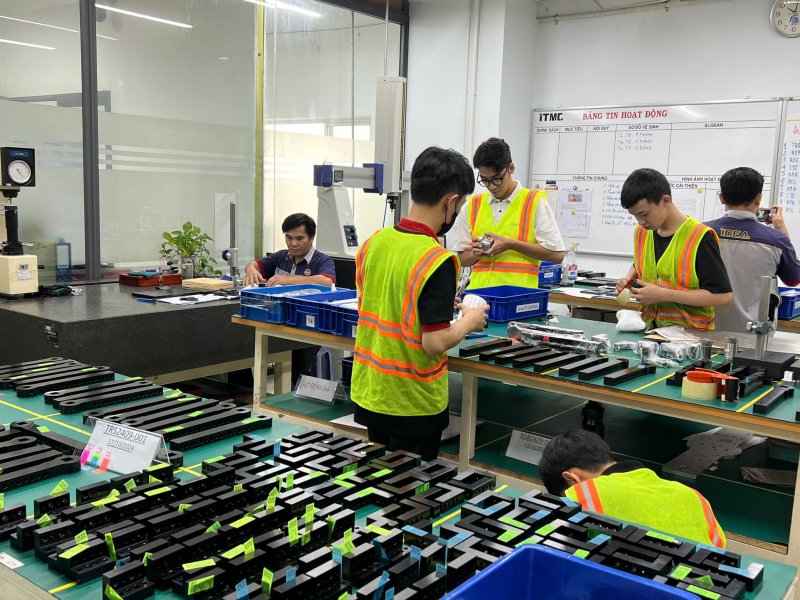
Industries worldwide are leveraging sensor-based automation to boost productivity and operational control. For example, in the food and beverage sector, sensors monitor hygiene compliance and packaging accuracy. In automotive manufacturing, they’re used for precision assembly and quality inspection. A notable case study from Che Tao May IDEA showcases how advanced sensor integration reduces human error in complex production environments.
Partner With IDEA for Smart Automation Solutions
Whether you’re looking to retrofit existing machinery or design custom solutions, IDEA Technology provides end-to-end services that align with your goals.
Integrating industrial sensors within your automation and smart control architecture not only optimizes production lines but also secures a future-ready operation. Proper sensor selection, strategic integration, and ongoing support are the keys to unlocking higher efficiency, lower costs, and improved product quality. Partner with IDEA today and transform your factory into a streamlined, intelligent system built for Industry 4.0.
Leave a Reply